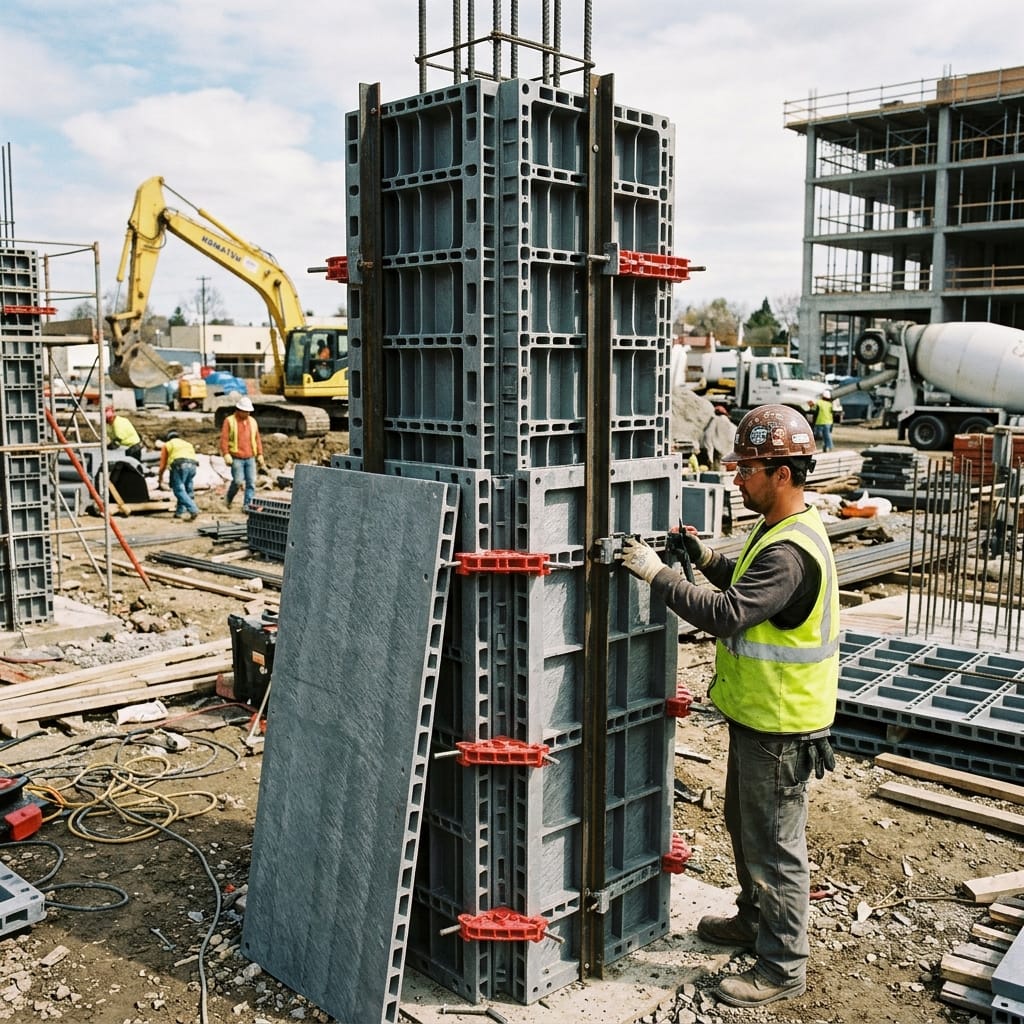
Industrial Sector Solutions
Chemical-resistant process piping, structural formwork boards, and heavy-duty high-pressure utility loops.
Industry Overview & Requirements
Manufacturing plants, process facilities, warehouses, and industrial zones operate under high mechanical and chemical stresses. Materials must carry chemical effluents, withstand high-pressure steam, and support concrete casting. The Philippine Department of Public Works and Highways (DPWH) guidelines and industrial standards mandate that piping and structural materials must comply with strict testing protocols. 5Dragon Construction Corp. supplies chemically inert HDPE pipes, reusable PP formwork boards, and high-strength PVC-O pressure pipe networks, ensuring reliable operations for industrial projects.
Key Challenges in Industrial Sector
Industrial developments face demanding operational challenges: 1. Chemical Corrosion: Process plants handle acids, alkalis, and solvents that degrade standard metal and PVC pipes. 2. High Pressures and Temperatures: Industrial utility loops run at high pressures and temperatures, causing pipe fatigue and joint failure. 3. High Formwork Costs: Conventional concrete formwork plywood degrades after a few pours, increasing material costs and waste. 4. Physical Impacts: Industrial facilities are subject to heavy vehicle impacts and ground movements, requiring ductile piping systems.
Our Specialized Solutions
To meet these industrial demands, 5Dragon Construction Corp. provides specialized high-performance materials: Chemically Inert HDPE Pipes for process waste; Reusable PP Formwork Boards (reusable 30 to 50 times) that do not absorb water; and Biaxially Oriented PVC-O Pipes for high-pressure, crack-resistant process water distribution.
Chemical-Resistant Industrial HDPE Piping
Manufacturing process plants manage corrosive wastewater and process chemicals daily. Our HDPE pipes offer complete resistance to industrial chemicals, acids, alkalis, and salts. They can handle fluid temperatures up to 60°C under pressure. Thermal butt-fusion welding makes the joints completely integrated, creating a seamless leak-proof piping pipeline that prevents environmental contamination.
HDPE is also highly flexible, allowing it to absorb physical impacts and ground movements without cracking. This durability reduces maintenance downtime and ensures continuous plant operations. The pipes are lightweight, reducing installation and handling costs in industrial sites.
Reusable PP Hollow Formwork Boards
Warehouse construction involves large concrete pours that strain conventional formwork plywood. Our PP hollow formwork boards offer a cost-effective, reusable alternative. Made from polypropylene, they are immune to moisture absorption and concrete chemicals. The smooth surface ensures easy demolding without oil, leaving a high-quality concrete finish that requires minimal grinding.
The boards can be sawed, nailed, and drilled using standard tools without cracking. They are 100% recyclable, helping industrial developers reduce construction waste and meet environmental standards. This makes them a smart choice for large-scale concrete casting.
Biaxially Oriented PVC-O Pressure Pipes
High-pressure process loops require piping with high tensile strength and fatigue resistance. 5Dragon supplies PVC-O pipes that are oriented biaxially, doubling their strength compared to traditional PVC. This allows for thinner walls and a larger internal bore, increasing water flow rates and lowering pumping costs. They are highly resistant to rapid crack propagation, ensuring safe operations under pressure.
The lightweight design makes installation fast, and the socket joints feature high-performance gaskets that prevent leaks. They are ideal for industrial water mains, fire protection loops, and process water lines.
Engineering Standard & Material Compliance Review
Designing modern piping, drainage, or architectural systems for Industrial Sector requires comprehensive alignment with national regulatory frameworks and international technical parameters. The physical stress applied to building materials in this sector dictates that every design, from mechanical layouts to structural elements, must undergo stringent sizing and pressure tests. For pipelines, structural sizing must account for water hammer transients, potential soil loading compaction, and chemical corrosion factors over a long lifecycle. At 5Dragon Construction Corp., we provide comprehensive engineering documentation, detailing parameters such as SDR classes, PN nominal pressure classes, and specific weathering ratings to support your project engineers. Our structural supplies comply with DPWH criteria, PNS, ISO, and ASTM testing methods, ensuring seamless approvals for large development projects.
In addition to standard compliance, material selection plays a critical role in minimizing lifecycle maintenance costs for municipal or private developers. Our logistics department maintains large inventories of piping systems, valves, and panels in strategic warehouses to support fast on-site deliveries. Our technical division offers guidance on fusion welding protocols, field hydrostatic testing, and proper trench bedding. This comprehensive support guarantees that the materials perform under the most intense operational and environmental conditions, preventing early system failures or costly pipe leaks.
Furthermore, sustainability guidelines require materials to have a minimal environmental footprint. Our PPR and HDPE pipes are made from fully recyclable thermoplastic polymers that do not release toxins during production or service. They are chemically inert, preventing the leaching of heavy metals or chemicals into drinking water systems. Smooth inner walls also reduce friction loss during water distribution, lowering the energy demands of high-volume pump loops and contributing to green building certifications. Partnering with 5Dragon Construction Corp. guarantees structural durability, regulatory compliance, and environment-friendly building design.
Rigorous Quality Assurance & Hydrostatic Testing
Before any piping network is commissioned for use in Industrial Sector applications, a series of rigorous quality assurance checks and hydrostatic tests must be performed to confirm joint integrity and leak-proof execution. A standard hydrostatic test involves filling the pipeline completely with clean water and venting all air pockets. The pressure is then slowly raised to 1.5 times the system's design operating pressure (or a minimum of 10 Bar) and held for a minimum of 24 hours. During this period, inspectors perform visual inspections at every fused junction, looking for weeping or drop-off in pressure. Additionally, our materials undergo laboratory verification, including tensile strength tests, melt flow rate index checks, and density measurements, ensuring that every batch delivered to your job site exhibits uniform structural performance. This careful testing minimizes the risk of catastrophic pipe ruptures under surge pressures, providing a secure water distribution loop.
Detailed Handling & Field Installation Protocols
Correct installation is key to ensuring the long service life of plumbing and structural systems. In the Industrial Sector sector, on-site installation teams must follow standard guidelines to protect the integrity of the materials: 1. Trench Bedding: Buried drainage and pressure lines require a firm, compacted bed of sand or gravel (minimum 150mm thick) to prevent stress from rocks and ground shifts. 2. Thermal Fusion Control: PPR and HDPE butt-fusion jointing requires precise control of heating times and temperatures. Overheating will constrict the internal bore, while underheating results in weak joints that leak under pressure. 3. Thermal Expansion Loops: Long hot water lines require expansion loops or expansion joints to absorb expansion without stressing joints. 4. Proper Support Spacing: Overhead installations require regular support hangers to prevent pipe sagging and joint stress under water weight.
By following these best practices, contractors can prevent leaks, reduce installation times, and ensure that the systems perform reliably for decades. 5Dragon provides technical support and on-site training to guide your engineering teams through every step of the installation process.
Technical Specifications & Standards
Our materials comply with DPWH guidelines, ISO certifications, and national plumbing standards to ensure structural safety and regulatory compliance.
| Material Type | Dimension Specifications | Rating/Reuse Value | Relevant Codes | Industrial Application |
|---|---|---|---|---|
| HDPE Chemical Pipe | 50mm - 400mm OD | SDR 11 (PN16) | ISO 4427, ASTM D3035 | Process Effluents & Waste Mains |
| PP Formwork Sheets | 4ft x 8ft x 15mm/18mm | 30 to 50 Reuses | ISO 9001 Quality Assured | Wall, Column, & Slab Concrete Pours |
| PVC-O Pressure Pipe | 90mm - 630mm OD | Class 500 (PN25) | ISO 16422 Standard | High-Pressure Industrial Water |
Frequently Asked Questions (FAQ)
Q1: Can HDPE pipes handle chemical industrial waste flow?
A1: Yes, HDPE is chemically inert and highly resistant to acids, alkalis, salts, and organic solvents, making it ideal for process plant waste lines.
Q2: What is the temperature limit for industrial HDPE piping?
A2: HDPE pipes can operate continuously from -40°C up to 60°C. For temperatures above 20°C, the pressure rating must be derated accordingly.
Q3: Why is PP formwork board superior to phenolic plywood in industrial projects?
A3: PP boards can be reused 30 to 50 times, do not absorb water, require no release oils, and are completely resistant to concrete chemical mixes.
Q4: What size PP formwork boards do you supply for warehouse concrete pours?
A4: We supply standard 4ft x 8ft (1220mm x 2440mm) sheets in thickness profiles of 12mm, 15mm, and 18mm to match standard framing grids.
Q5: Can PVC-O pressure pipes handle industrial chemical process lines?
A5: Yes, PVC-O oriented pipes retain the chemical resistance of PVC while offering double the tensile strength and extreme fatigue protection.
Q6: How does the tensile strength of PVC-O compare to traditional PVC?
A6: Biaxial orientation increases the tensile strength of PVC-O to over 50 MPa, double that of traditional uPVC (25 MPa), allowing thinner walls.
Q7: Do PP formwork boards split or crack when nailed or sawed?
A7: No, nano-composite polypropylene can be nailed, screwed, sawed, and drilled using standard woodworking tools without cracking or splitting.
Q8: Is HDPE resistant to rapid crack propagation in high-pressure loops?
A8: Yes, the high ductility of HDPE resins arrests cracks, preventing catastrophic failure under transient pressure surges.
Q9: What standard testing applies to industrial piping systems?
A9: Pipes are tested according to ISO 4427 or ASTM D3035 criteria for dimensions, hydrostatic strength, and melt flow indexes.
Q10: Can PP formwork boards be recycled after many concrete pours?
A10: Yes, PP boards are 100% recyclable. Worn sheets can be scrap-reprocessed, making them highly eco-friendly.
Recommended Materials
High-performance materials supplied for this sector: